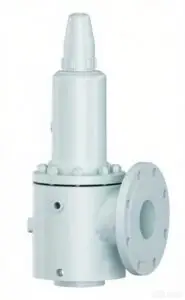
Safety Valve – Key Advantages
Automatic Overpressure Protection
Uninterrupted safety response
Prevents catastrophic failuresReduced Operational & Maintenance Costs
Protects high-value equipment
Minimizes media wasteReusable & Long-Lasting Performance
Repeatable actuation
Low lifecycle costCompliance with Industry Standards
Regulatory requirements
Audit & liability protectionEnvironmental & Personnel Safety
Controlled release
Worker protectionVersatility Across Applications
Wide compatibility
System integration
A safety valve is a critical pressure relief device installed on pressure vessels, pipelines, boilers and industrial process systems. It automatically opens to discharge excess fluid (gas, liquid or steam) when internal pressure rises above the preset safe limit, and closes tightly once pressure returns to normal. It is designed to prevent equipment damage, explosions and safety accidents caused by overpressure.
Safety valves are essential safety accessories widely used in oil & gas, chemical, power generation and manufacturing industries. Working purely by mechanical pressure without external power supply, they provide reliable overpressure protection for all kinds of pressurized equipment.
When system pressure exceeds the rated value, the valve disc lifts to release redundant medium and lower pressure. After the pressure drops back to the safe range, the valve closes and maintains a tight seal. As a standard safety device complying with API, ASME and ISO codes, safety valves protect personnel, facilities and the whole production system from overpressure hazards.
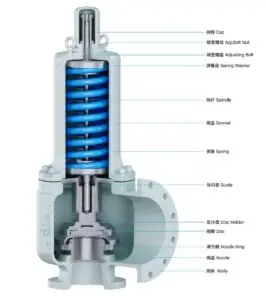
Spring Loaded Safety Valves
Spring-Loaded Safety Relief Valves are designed for critical overpressure protection in power plant boilers, pressure vessels, temperature-reducing equipment, and other industrial systems. Their core function is to automatically relieve excess pressure and prevent system overpressure beyond the maximum allowable value, ensuring the safe operation of equipment at all times.
- Sizing and selection: per API 520 (ASME Sec. VIII)
- Design: per API 526
- Testing: per API 527 (ASME PTC 25)
- Flange dimensions: per ASME B16.5
- A48C Open Bonnet Plain Lever Safety Valve
- A48Y High-Temperature High-Pressure Safety Valve with Radiator
- High-Performance Steam Safety Valve (compliant with ASME Sec. I requirements)
- High-Temperature High-Pressure Welded Safety Valve
Key Features
- Open bonnet design with radiator for high-temperature applications
- Angle-type safety relief valve
- Low-lift / full-lift configurations for high-temperature and high-pressure service, with metal-to-metal seating and optional lever
- Inlet connections: Flanged per ASME, DIN, JIS, BS, or other regional standards
- Outlet connections: Flanged per ASME, DIN, JIS, BS, or other regional standards
| Item | Details |
|---|---|
| Size Range | 1/2″ – 16″ (DN20 – DN400) |
| Pressure Rating | Class 150 – Class 600 / PN10 – PN100 |
| Temperature Range | -20°C ~ 350°C |
| Body Material | WCB, WC6, WC9, CF8, CF8M |
| Disc Material | 2Cr13, 304, 316 |
| Stem Material | 2Cr13, 304, 316 |
| Spring Material | 50CrVA, 50CrVA with PTFE coating |
| End Connections | Flanged (FF, RF, RJ); Butt weld per ASME B16.25 / GB/T 12224 |
| Flange Standards | ASME, DIN, JIS, BS, or equivalent |
| Structure Style | Spring-loaded, angle pattern, open bonnet |
| Actuator Options | Lever-operated |
| Design Standard | API RP 520 |
| Face-to-Face Standard | API 526 |
| Test Standard | API 527 |
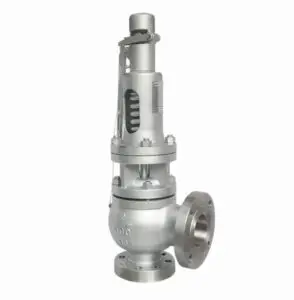
Pilot Operated Safety Valve
Key Features
- New structure pilot operated safety valve, suitable for petroleum, natural gas, chemical, power, metallurgy and fuel gas sectors
- Premium overpressure protection for pressurized equipment, vessels and pipelines
- Pilot valve controls main valve indirectly for stable performance
- Main valve with sleeve piston and double sealing seat
- High precision, good reusability and fast reseating speed
- Excellent sealing performance against high-pressure leakage
- On-line adjustment available; automatic reseating after multiple relief cycles
- Durable, safe, simple operation and convenient maintenance
| Item | Details |
|---|---|
| Size Range | 1″ – 8″ (DN25 – DN200) |
| Body Material | WCB, LCB, CF8, CF8M, CF3M |
| Pressure Rating | Class 150 – Class 900 / PN16 – PN160 |
| Disc Material | 304+F46, 316+F46, Monel+F46, 316L+F46 |
| End Connection | Flange (FF, RF, RJ); Butt weld |
| Spring Material | 316, Inconel |
| Structure Style | Pilot operated, angle type |
| Stem Material | A182 F6a, 304, 316, 17-4PH, F11 |
| Actuator Type | Pilot operated |
| Temperature Range | -196℃ ~ 650℃ |
| Design Standard | API RP 520 |
| Face-to-Face Standard | API 526 |
| Connection Standard | Flange: ASME B16.5, ASME B16.47, GB/T 9113, JB/T 79 Butt weld: ASME B16.25, GB/T 12224 |
| Test Standard | API 527 |
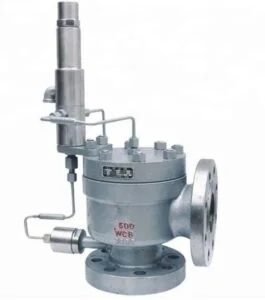
Safety Pressure Relief Valve
Key Features
- Low lift & full lift designs available
- Enclosed bonnet construction
- Metal-to-metal seating, standard design for liquid media
- Flanged ends compliant with ASME, DIN, JIS, BS and other international standards
| Item | Details |
|---|---|
| Size Range | 1/2″ – 16″ (DN20 – DN400) |
| Body Material | WCB, CF8, CF8M |
| Pressure Rating | Class 150 – Class 1500 / PN10 – PN250 |
| Disc Material | 2Cr13, 304, 316 |
| End Connection | Flange (FF, RF, RJ) |
| Spring Material | 50CrVA, 50CrVA with PTFE coating |
| Structure Style | Spring loaded, open / enclosed bonnet, angle type |
| Stem Material | 2Cr13, 304, 316 |
| Actuator Options | With or without lever |
| Temperature Range | -60℃ ~ 200℃ |
| Design Standard | API RP 520 |
| Face-to-Face Standard | API 526 |
| Flange Standard | ASME, DIN, JIS, BS etc. |
| Test Standard | API 527 |
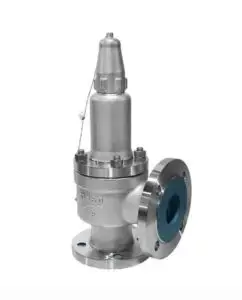
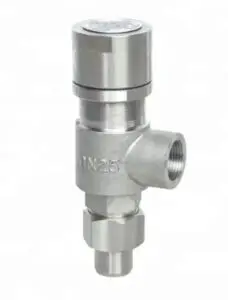
Thread Pressure Relief Valve
- Spring-loaded low-lift threaded safety relief valves: Suitable for systems carrying water, air and steam (operating temperature ≤ 200℃).
- Spring-loaded full-lift threaded safety relief valves: Designed for media including air, steam, water and nitrogen-hydrogen mixed gas (operating temperature ≤ 200℃).
Key Features
- Angle type safety / pressure relief valve
- Low-lift design, available with metal-to-metal seating or soft seal
- Threaded end connections
Bellows Balanced Safety Valve